

Anxious Attachment in Relationships: Why You Feel Like Too Much, and How to Finally Feel Safe in Love
If closeness feels precious but perpetually at risk, you may have an anxious attachment style. A clinical psychologist explains where it comes from, how to spot its signs and triggers, and the evidence-based path to feeling secure in love.
In this article
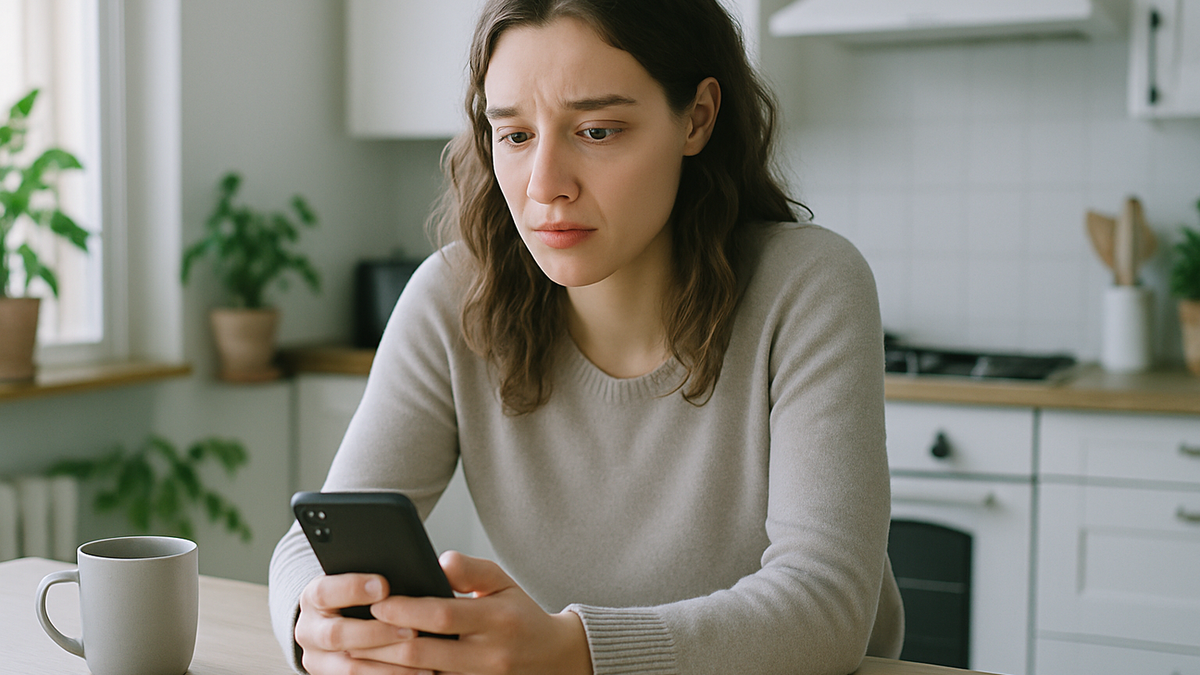
If you've ever refreshed your phone a dozen times waiting for a reply, replayed a partner's tone of voice looking for hidden rejection, or felt a wave of panic when someone you love seems even slightly distant, I want you to know something first: you are not broken, and you are not alone.
As a clinical psychologist and the founder of Dzeny, I've sat with hundreds of people who describe the same exhausting loop. On the outside, they look capable and calm. On the inside, love feels like standing on a trapdoor. This pattern has a name — anxious attachment — and understanding it is the first real step toward relief. Much of what you may have labeled as "being too needy" is actually a nervous system doing exactly what it learned to do to stay connected. This is often the root of what many people experience as relationship anxiety, and it is far more common than most people admit.
In this article, I'll walk you through what anxious attachment in relationships actually is, where it comes from, how to recognize its signs and triggers, how it differs from a secure or avoidant style, and — most importantly — how you can heal it. Change is genuinely possible. I've watched people move from panic to peace, and the science confirms this shift is within reach.
Key Takeaways
You Don’t Have to Feel Like “Too Much” Anymore
Anxious attachment is a pattern you can change. Dzeny gives you a private, judgment-free space to understand your triggers and practice feeling secure — 24/7, whenever the anxiety spikes.
Start Free with DzenyDisclaimer
This article is for informational and educational purposes only and is not a substitute for professional medical advice, diagnosis, or treatment. Always seek the advice of your physician, a licensed mental-health professional, or other qualified provider with any questions you may have regarding a medical or psychological condition. If you are in crisis or may be in danger, contact your local emergency services or a crisis helpline immediately.
Understanding Anxious Attachment
Attachment Theory in Plain Language
Attachment theory began with British psychiatrist John Bowlby, who observed that human beings are wired from birth to seek closeness with a primary caregiver for safety and survival. To Bowlby, the drive to stay near a protective figure was not a sign of immaturity but a biological system as fundamental as hunger or thirst. His colleague Mary Ainsworth later tested these ideas through her famous "Strange Situation" experiment, watching how infants responded when a caregiver left the room and returned. Some babies protested, then settled quickly on reunion; others struggled to be soothed at all. Her work gave us the foundational map of how early bonds shape the way we love as adults.
What matters most here is a single insight: the way our earliest caregivers responded to our distress taught us what to expect from closeness itself. A child whose bids for comfort were met reliably learns that people can be trusted. A child whose bids were met unpredictably learns to work much harder for connection — and to stay on alert for its loss.
The Four Attachment Styles
From this research emerged four broad patterns: secure, anxious (sometimes called anxious-preoccupied), avoidant (dismissive), and disorganized (fearful-avoidant). A person with a secure attachment style tends to trust that closeness is available and reliable. The other three styles reflect different strategies the nervous system developed when connection felt uncertain or unsafe. None of them is a diagnosis, and none is a fixed identity. Think of them instead as default settings — patterns that can be revised.
Where the Anxious-Preoccupied Style Fits
If you have an anxious attachment style, your deepest wiring says: closeness is precious, but it can vanish at any moment. In 1987, psychologists Cindy Hazan and Phillip Shaver extended attachment theory to adult romantic love and confirmed that these childhood patterns carry into our relationships. The anxious-preoccupied person craves intimacy intensely, monitors it constantly, and reads ambiguity as danger. It isn't weakness — it's a survival strategy that once made sense.
I think of a client I'll call Maya. Brilliant, warm, the friend everyone leans on — and yet every relationship left her drained. "I become a detective," she told me. "I read his texts for punctuation. A period instead of an exclamation point and I'm convinced he's done with me." Maya wasn't irrational. Her system had learned, very early, that love could disappear without warning, so she was doing what it had always done: watching for the first sign of the end, so she could brace for it. Naming that pattern out loud was the moment her healing began.
What Causes Anxious Attachment
Inconsistent Early Caregiving
The most common root is inconsistency. When a caregiver was sometimes warm and available and other times distracted, overwhelmed, or absent — without a predictable pattern — a child learns that love is real but unreliable. The adaptive response is to stay hyper-tuned to the caregiver and to amplify distress signals to pull them back. Cry louder, cling harder, escalate — because sometimes that was the only thing that worked. That amplification, which attachment researchers call a "hyperactivating strategy," becomes the template for later relationships.
Childhood Experiences and Temperament
Attachment isn't purely about "bad parenting," and I want to be careful here, because many people carrying an anxious pattern come from loving homes. A sensitive temperament, early separations, a serious childhood illness, the loss of a caregiver, or a parent's own unresolved stress and grief can all shape an anxious pattern. Ainsworth's and Bowlby's work made clear that attachment forms in the relationship between child and caregiver, not from any single event. Two children in the same family can emerge with different styles because they experienced that relationship differently.
Past Relationships That Reinforced the Fear
Adult experiences matter too. A betrayal, an abrupt breakup, or a long relationship with an emotionally unavailable partner can deepen an existing tendency or activate one that was dormant. This is often when people first notice their fear of abandonment taking over, sometimes years into adulthood. I've worked with people who described themselves as secure until one relationship taught their body that love was dangerous — after which the old childhood wiring, quiet for decades, came roaring back.
Signs of Anxious Attachment in Relationships
The signs of anxious attachment show up in two places at once: in outward behavior and in the private inner monologue almost no one sees. Below are the patterns I encounter most.
Needing Constant Reassurance
Among the clearest signs of anxious attachment is a recurring need to hear that you're loved, wanted, and not about to be left. The reassurance soothes you briefly, then the doubt returns and the cycle repeats. It isn't that your partner hasn't reassured you enough — the anxiety renews itself faster than words can settle it. Internally, this sounds like: Does he still want me? He said yes an hour ago, but does he really? What if he only said it to keep the peace? The question is never fully answered because the anxiety, not the evidence, is asking it.
Protest Behavior and Hyperactivating Strategies
When you sense a partner pulling away, you may feel a surge of near-panic. Attachment researchers call the reactions that follow "protest behavior": repeated calling or texting, starting a fight to force engagement, threatening to leave first, keeping score, excessive attempts to reestablish contact, or withdrawing in the hope they'll come after you. These are what Mikulincer and Shaver describe as hyperactivating strategies — the system turning up the volume on distress to force reconnection. They aren't manipulation. They're a distressed attempt to restore closeness, and they usually leave the person feeling ashamed afterward.
A client I'll call Daniel described sending fourteen messages in an evening when his girlfriend went quiet. "By the last one I hated myself," he said. "I knew it was pushing her away, and I couldn't stop." That is protest behavior — not a choice he was making so much as an alarm he was obeying.
Hypervigilance and Scanning for Threat
If you can detect the smallest shift in your partner's tone, facial expression, or texting rhythm — and immediately assume it's about you — that hypervigilance is a hallmark of the anxious style. Your system is scanning the environment for the earliest sign of rejection so it can act before the "loss" happens. This is exhausting precisely because it never rests; even good moments are monitored for the crack that might be forming underneath.
Self-Silencing and Losing Your Own Needs
A quieter sign is the tendency to go along, to say "I don't mind" when you do, to shape yourself around what you imagine will keep your partner close. You may not even notice you're doing it, yet the resentment builds under the surface and tends to leak out sideways.
Anxious Attachment Triggers
Perceived Distance and Delayed Replies
The most reliable anxious attachment triggers involve any hint of emotional or physical distance. An unanswered text, a partner who wants a quiet evening alone, or a shorter-than-usual goodbye can all set off the alarm. Objectively small events feel enormous because your nervous system codes them as threats to the bond. The gap between "he's busy" and "he's leaving me" collapses in an instant.
Conflict and Ambiguity
Disagreement is especially destabilizing. Where a secure partner can tolerate a fight as a temporary rupture that will repair, the anxious system often experiences conflict as proof that the relationship is ending. Ambiguity — not knowing where you stand — can be even harder to bear than a clear "no," because uncertainty leaves the alarm running indefinitely. If this resonates, you may find it helpful to read more about what fuels anxiety inside a relationship.
Life Stress Spilling Into the Bond
Triggers aren't only relational. Poor sleep, work pressure, hormonal shifts, illness, or general anxiety lower your threshold, and a partner's neutral behavior can suddenly feel like rejection. Recognizing that your baseline stress is part of the equation is genuinely freeing — it means that on a rested, regulated day, the same text might not have moved you at all. The trigger isn't only "out there"; it's a meeting of the event and the state of your nervous system.
How Anxious Attachment Differs From a Secure or Avoidant Style
To see the anxious pattern clearly, it helps to place it beside the other two most common adult styles. The table below is a simplified map — most of us have a dominant style with shades of others — but it captures the core differences I see in the room.
| Anxious (Preoccupied) | Secure | Avoidant (Dismissive) | |
|---|---|---|---|
| Core belief | "Love is precious but could vanish; I must work to keep it." | "I'm worthy of love, and closeness is reliable." | "I'm safest relying on myself; too much closeness is risky." |
| Response to conflict | Reads rupture as the end; escalates or pleads to repair fast | Tolerates rupture, trusts repair, stays engaged | Shuts down, withdraws, or minimizes the issue |
| Need for reassurance | High and recurring; reassurance soothes briefly | Moderate; can ask for it and take it in | Low outwardly; may see reassurance as smothering |
| When partner pulls away | Panic, pursuit, protest behavior | Concern, then direct check-in | Relief, distance, focus elsewhere |
| Typical inner monologue | "Did I do something wrong? Are they leaving?" | "Something's off — I'll ask when there's a good moment." | "I need space. Why is this such a big deal?" |
Anxious Attachment vs Secure Attachment
The core difference in anxious attachment vs secure attachment is the felt sense of safety. A securely attached person can be close without losing themselves and apart without fearing the end. They can voice a need calmly and trust that a good partner will respond. For the anxious person, closeness feels fragile and separation feels like danger, so needs come out as either urgent pleas or silent resentment. Importantly, security is not the absence of worry — secure people feel hurt and jealousy too. The difference is that their alarm resets, and they can soothe themselves back to baseline.
The Avoidant Style
Where the anxious person moves toward closeness under stress, the avoidant person moves away, valuing independence and finding too much intimacy suffocating. Under the surface, many avoidant people carry their own fear of dependence — they simply learned to cope by suppressing needs rather than amplifying them. Neither style is "worse." Both are strategies that grew out of early experience, and both can move toward security.
The Anxious-Avoidant Trap
Painfully, anxious and avoidant people are often drawn to each other, and understanding why is one of the most clarifying things I can offer.
At the start, the pairing can feel electric. The avoidant partner's independence reads as strength and mystery to the anxious partner, while the anxious partner's warmth and pursuit feels flattering and intense to the avoidant one. But the honeymoon rests on a fault line. The moment intimacy deepens, their nervous systems begin to work against each other. The anxious partner seeks more closeness and reassurance; the avoidant partner, feeling crowded, pulls back to breathe. That withdrawal is precisely the anxious partner's deepest trigger, so they pursue harder. And more pursuit is precisely the avoidant partner's deepest trigger, so they retreat further.
This is the pursue-withdraw cycle, and it is self-reinforcing: each person's coping strategy activates the other's core fear. The anxious partner concludes, "I knew they'd leave." The avoidant partner concludes, "I knew relationships were suffocating." Both feel their worst beliefs confirmed, when in truth they're caught in a loop neither is choosing. The intensity can even be mistaken for passion, which is why the trap is so sticky.
Breaking the cycle rarely happens by trying to change the other person mid-loop. It happens when at least one partner learns to regulate their own alarm — the anxious partner soothing the urge to pursue, the avoidant partner staying present instead of fleeing — and when both can name the pattern out loud rather than acting it out. This is why so many people benefit from resources on overcoming relationship anxiety before the cycle hardens into a permanent groove.
The Toll It Takes
Overthinking and Rumination
Anxious attachment lives in the mind long after an interaction ends. You may replay a conversation for hours, hunting for evidence of trouble, drafting and deleting messages, searching for a certainty that never arrives. This kind of relentless rumination is exhausting and rarely produces the reassurance it's searching for; if it dominates your days, you might recognize yourself in accounts of overthinking driven by relationship anxiety.
Jealousy and Comparison
Because the fear is about losing your person, jealousy often runs high — not from a lack of love, but from a lack of felt security. You may compare yourself to others, scan for rivals, or interpret ordinary interactions as threats. The comparison is rarely about the other person's actual qualities; it's the anxiety looking for a reason it can point to.
Self-Abandonment
The most quietly damaging cost is self-abandonment: shrinking your needs, agreeing to things you don't want, and losing track of your own preferences to keep a partner close. Over time this erodes self-worth and, ironically, the very connection you're trying to protect — because a partner never gets to meet the real you, only the managed, accommodating version. A relationship built on your disappearance cannot feel safe, no matter how hard you work at it.
How to Heal Anxious Attachment
Learning how to heal anxious attachment is not about becoming a different person or never feeling anxious again. It's about widening the gap between a trigger and your reaction, so that the old alarm no longer runs the relationship. Below is the practical path I walk through with clients, with concrete micro-actions you can try this week.
Step 1: Build Self-Awareness Without Shame
Healing begins with naming the pattern as it happens, without self-judgment. When you can say, "This is my attachment system activating, not objective reality," you create a small but crucial gap between the trigger and your response. That gap is where change lives.
Try this week: Keep a brief "trigger log" on your phone. When you feel the surge, jot three things — what happened, the story your mind told ("he's leaving"), and a possible alternative ("he's tired and busy"). You're not forcing yourself to believe the alternative; you're teaching your brain that more than one story exists.
Step 2: Regulate Your Nervous System
Because anxious attachment is a body-based alarm, calming the body matters as much as changing your thoughts. When the alarm fires, you cannot reason your way out of a system that thinks it's fighting for survival — you first have to signal safety to the body.
Try this week: Practice one grounding tool before you need it, so it's ready in a crisis. Slow exhale breathing (breathe in for four, out for six, for two minutes) activates the calming branch of your nervous system. The 5-4-3-2-1 sensory scan — naming five things you see, four you hear, and so on — pulls you out of the spiral and into the present. Cold water on the wrists or face works fast when panic peaks. The goal is simple: teach your body, over and over, that distance is not death.
Step 3: Name and Communicate Your Needs Directly
Healing means learning to state needs clearly and early, before they build into protest. "I felt anxious when I didn't hear back — could we agree on a quick text when plans change?" is worlds apart from a panicked accusation. Direct, calm communication is a skill, not a personality trait, and it's one of the most powerful you can build. This is especially important in the early, uncertain stage of a new relationship, when the anxious system is most easily activated.
Try this week: Write out one recurring need as a request rather than a complaint. Complaints point at the other person ("You never call"); requests point at a solution ("Would a quick text midday work for both of us?").
Step 4: Set and Hold Boundaries
It sounds counterintuitive, but boundaries are a form of security. When you know you can say no, tolerate a partner's disappointment, and still be okay, you no longer have to abandon yourself to keep the peace. Boundaries also protect you from staying too long in a dynamic that keeps your alarm permanently on.
Try this week: Practice one small "no" or one honest preference — where to eat, how you spend an evening — and notice that the relationship survives it. Each time it does, your body updates its prediction that honesty leads to loss.
Step 5: Do the Deeper Work in Therapy
Attachment styles are not life sentences. Researchers describe "earned secure attachment" — the well-documented capacity to develop security in adulthood through corrective relationships and dedicated work. Several evidence-based therapies support this. Cognitive behavioral therapy (CBT) helps reshape the catastrophic thinking that fuels the spiral. Emotionally focused therapy (EFT), developed by Sue Johnson, works directly with attachment dynamics in couples and has strong research support. Attachment-based and psychodynamic approaches trace the pattern back to its origin and offer a corrective relational experience with the therapist. Levine and Heller's book Attached (2010) is an accessible primer many of my clients start with while they look for the right professional.
Step 6: Choose Securely-Attached Partners — and Let Yourself Trust Them
Security also grows through the company you keep. Gravitating toward partners who are consistent, responsive, and comfortable with closeness gives your nervous system the repeated evidence it needs. And when reassurance is offered, the work is to let yourself take it in rather than test it. A client I'll call Priya put it perfectly after months of practice: "The scariest part wasn't finding someone steady. It was believing him when he stayed." That believing — choosing to trust reassurance instead of interrogating it — is itself the healing.
How AI Support Can Help
Support Between Sessions
One of the hardest parts of healing anxious attachment is that the triggers strike at 2 a.m., in the middle of a fight, or in the silence after an unanswered text — rarely during a therapy appointment. This is where an evidence-informed AI companion can genuinely help. Dzeny is an AI-powered mental-health companion, available 24/7, that more than 48,000 people use to process difficult moments as they happen. In an eight-week study of 280 adults at Synergy University Dubai, users experienced a 43% reduction in anxiety.
Practicing New Patterns Safely
Used well, this kind of tool is a place to pause before you send the anxious text, to name what you're feeling, to get grounded reassurance in a healthy way, and to rehearse the calmer communication you're building in therapy. It is not a replacement for a human therapist or for the corrective experience of a safe relationship — think of it as steady support alongside that deeper work, helping you practice new attachment patterns until they start to feel like your own.
One Small Step You Can Take Right Now
You don’t have to work through this alone. Dzeny is a private, judgment-free space to understand your patterns and practice healthier ones — available whenever you need it, 24/7.
Start Free with DzenyBuilding a More Secure Relationship: Long-Term Outlook
Choosing and Nurturing Safe Connection
Over time, security grows from repeated experiences of closeness that doesn't disappear. That means gravitating toward partners who are consistent and responsive, and — just as importantly — letting yourself trust reassurance instead of testing it. Secure love can feel unfamiliar at first, even boring, precisely because it isn't triggering the old alarm. Part of healing is learning to reinterpret calm as safety rather than as the absence of feeling.
Patience and Self-Compassion
Attachment patterns took years to form, and they soften gradually rather than overnight. Expect setbacks, especially under stress, and treat them as information rather than failure. When you slip into an old pattern, the practice is not to shame yourself but to notice, soothe, and try again. Self-compassion is not indulgence here — research consistently links it to lower anxiety and greater resilience, and it is a core mechanism of change.
If you want something more concrete than a gut feeling, the Is My Partner Right for Me? Compatibility Test breaks things down into values, communication, trust, and connection.
Conclusion
Anxious attachment is not a flaw in your character; it's a protective pattern your younger self built with the tools they had. The very sensitivity that makes love feel overwhelming can, once regulated, become a capacity for deep, attuned connection — the anxious person, healed, often makes an extraordinarily present and devoted partner. With self-awareness, nervous-system care, honest communication, boundaries, the right therapeutic support, and patience, you can move toward the secure, steady love you deserve — the kind where you no longer have to earn your place by staying anxious. You are worth that kind of safety, and it is within reach.
References
- 1.Bowlby, J. (1969). Attachment and Loss, Vol. 1: Attachment. New York: Basic Books.
- 2.Ainsworth, M. D. S., Blehar, M. C., Waters, E., & Wall, S. (1978). Patterns of Attachment: A Psychological Study of the Strange Situation. Hillsdale, NJ: Erlbaum.
- 3.Hazan, C., & Shaver, P. (1987). Romantic love conceptualized as an attachment process. Journal of Personality and Social Psychology, 52(3), 511–524.
- 4.Levine, A., & Heller, R. (2010). Attached: The New Science of Adult Attachment and How It Can Help You Find — and Keep — Love. New York: TarcherPerigee.
- 5.Mikulincer, M., & Shaver, P. R. (2016). Attachment in Adulthood: Structure, Dynamics, and Change (2nd ed.). New York: Guilford Press.
- 6.Fraley, R. C. (2019). Attachment in adulthood: Recent developments, emerging debates, and future directions. Annual Review of Psychology, 70, 401–422.
- 7.Johnson, S. M. (2019). Attachment Theory in Practice: Emotionally Focused Therapy (EFT) with Individuals, Couples, and Families. New York: Guilford Press.
- 8.Neff, K. D. (2011). Self-compassion, self-esteem, and well-being. Social and Personality Psychology Compass, 5(1), 1–12.
- 9.American Psychological Association (APA). Attachment. APA Dictionary of Psychology.
- 10.National Institute of Mental Health (NIMH). Anxiety Disorders. U.S. Department of Health and Human Services.
- 11.Anxiety and Depression Association of America (ADAA). Understanding Anxiety.
- 12.American Psychiatric Association. (2013). Diagnostic and Statistical Manual of Mental Disorders (5th ed., DSM-5). Arlington, VA: American Psychiatric Publishing.
- 13.Simpson, J. A., & Rholes, W. S. (2017). Adult attachment, stress, and romantic relationships. Current Opinion in Psychology, 13, 19–24.
- 14.Feeney, B. C., & Collins, N. L. (2015). A new look at social support: A theoretical perspective on thriving through relationships. Personality and Social Psychology Review, 19(2), 113–147. (Published in association with the field of Attachment & Human Development.)
Frequently Asked Questions

Written by
Valentina Lipskaya
Clinical Psychologist · Gestalt Therapist · CBT Specialist · ICF Certified Coach · MBA Professor
Panic Disorder, Anxiety, CBT & Gestalt Therapy
Valentina Lipskaya is a certified clinical psychologist and gestalt therapist specializing in panic disorders, anxiety, and neurological conditions. With over 15 years in psychology and 7 years of hands-on clinical practice, she has helped more than 750+ clients overcome panic, chronic anxiety, and psychosomatic conditions — without medication. Her work at Dzeny translates evidence-based therapeutic methods into practical, accessible guidance for everyday mental health.