

The Night Belongs to Me: Understanding Revenge Bedtime Procrastination
It is not discipline. Staying up late is often the only hour of the day that belongs to you.
In this article
What Is Actually Happening at Midnight
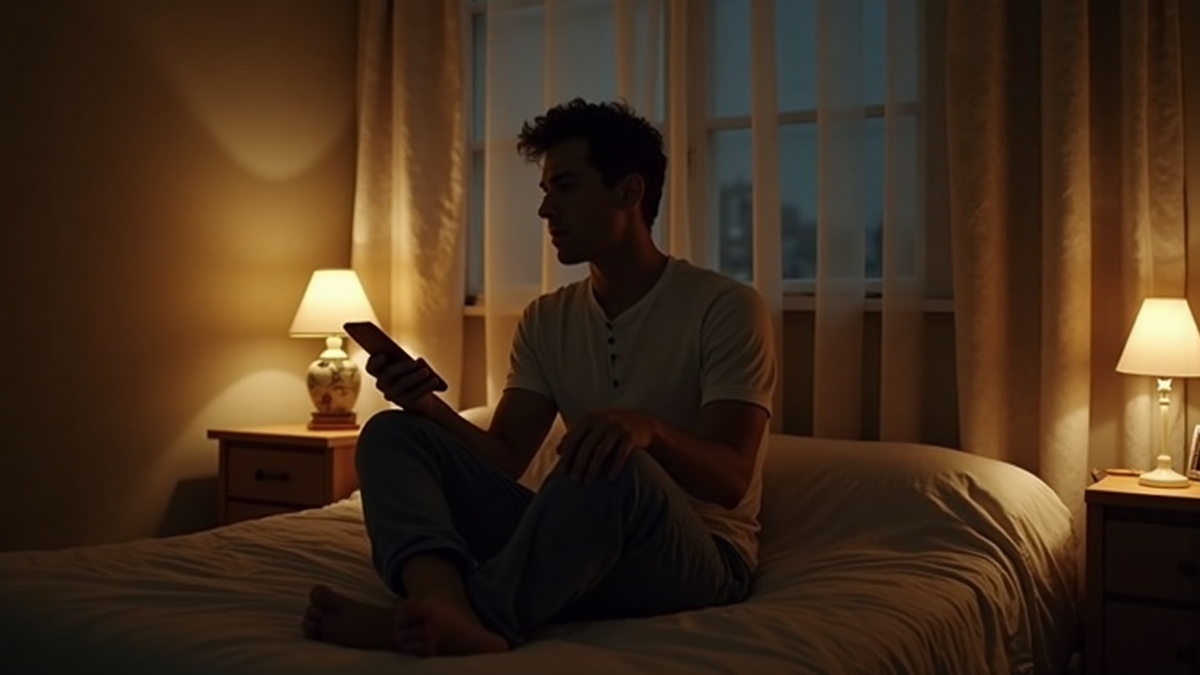
It is almost midnight. You have work tomorrow, you are already tired, and yet here you are — watching one more episode, scrolling through content you barely register, doing absolutely nothing that feels important. You know you should sleep. You choose not to. And in the morning you will feel the exact weight of that choice pressing down on you.
I want to talk about this pattern, because I see it constantly in my practice and I think it is almost universally misunderstood — by the people who experience it, and sometimes by the clinicians who try to help them.
This is called revenge bedtime procrastination, a phrase popularised by journalist Daphne K. Lee in 2020 drawing on a Chinese internet concept (*bàofù xìng áoyè*). The "revenge" part is important. It is not idle procrastination. It is a reclamation. People are staying up late specifically to take back time that the day consumed without asking.
This Is Not a Discipline Problem
The first thing I want to name clearly is that this behaviour is not laziness. It is not a failure of willpower or a sign that someone is poorly organised. When I sit with clients who do this — a nurse finishing a twelve-hour shift, a parent who spent every waking hour responding to someone else's needs, a project manager whose calendar was owned entirely by other people — I do not see undisciplined people. I see people with a genuine, unmet need for autonomy.
Research on self-determination theory, developed by Deci and Ryan, identifies autonomy — the sense that your actions are genuinely your own — as one of the three core psychological needs for wellbeing. When that need goes chronically unmet during the day, the nervous system does not simply switch off at bedtime. It looks for the window. For many people, the only window is after everyone else has gone to sleep.
The behaviour is entirely rational given the constraint. That is what makes it so persistent and why telling yourself to "just go to bed earlier" achieves almost nothing.
Who Gets Hit Hardest
Revenge bedtime procrastination is not randomly distributed. Certain life circumstances make it far more likely.
- High-demand caregiving roles. Parents of young children, people caring for elderly relatives, anyone whose day involves constant emotional labour with little reciprocal support.
- Over-scheduled professionals. People in roles where every hour is accounted for by institutional demands — healthcare workers, teachers, corporate employees with back-to-back meeting cultures.
- People with low daytime autonomy generally. This includes people in difficult housing situations, those managing chronic illness, and people navigating environments where they have limited say over how they spend their time.
- Women disproportionately. This is not a biological claim. It reflects the documented reality that domestic labour and caregiving remain unequally distributed, which means the post-everyone-else-is-settled window is structurally more important for women.
A 2021 study by Kroese et al. found that bedtime procrastination was significantly predicted by low self-regulatory capacity at the end of the day — which makes sense, because autonomy depletion and self-regulatory depletion travel together. The behaviour emerges precisely when the person is least equipped to override it.
The Real Cost
I do not want to lecture here, because the people doing this already know they are tired. But I want to be specific about what the cost actually is, because it is not just fatigue.
Sleep debt is cumulative and it does not resolve over the weekend the way we hope. Chronic mild sleep restriction — even one to two hours less than your biological need — impairs working memory, emotional regulation, and the prefrontal functions that govern impulse control. In other words: the self-regulation you already lack is further eroded by the sleep loss that revenge procrastination causes.
This creates a cycle that is worth naming directly:
| What happens | Why it escalates |
|---|---|
| Low daytime autonomy drains self-regulation | You arrive at night with less capacity to choose sleep |
| Late nights reduce sleep duration | Next-day emotional regulation deteriorates further |
| Worse emotional regulation increases need for escape | The pull toward late nights grows stronger |
| Morning fatigue triggers rushed, reactive days | Autonomy over the day decreases even further |
Each step feeds the next. The behaviour that was originally protective becomes the mechanism of further harm.
Why Sleep Hygiene Advice Misses the Point
Standard sleep hygiene advice — stop screens an hour before bed, keep a consistent schedule, avoid caffeine after two in the afternoon — is not wrong. But it addresses the symptom while leaving the cause entirely intact. Telling someone in a depleted, autonomy-starved state to simply observe a bedtime is a bit like telling someone who is thirsty not to think about water.
The deeper problem is that sleep hygiene advice is itself experienced as another demand. Another rule. Another thing your day is imposing on you. For someone who is already fighting for ownership of their own time, a bedtime rule can paradoxically strengthen the resistance, not weaken it.
I see this constantly. A client dutifully puts their phone on the charger at ten. They lie in bed, staring at the ceiling, restless and resentful, unable to sleep. The phone was never really the point.
What Actually Helps
Return autonomy earlier in the day
This is the structural intervention. If the night is being used to compensate for a day that offered no real choice, the answer is to introduce genuine choice points during daylight hours. Not big choices — a ten-minute walk you chose, a lunch break you actually took, a task you did in the order *you* decided. Small acts of self-determination, distributed across the day, reduce the pressure that accumulates and explodes at midnight.
This means having an honest conversation with yourself — and sometimes with partners, managers, or co-parents — about where the day has been completely annexed. That conversation is often uncomfortable. It is also often the most useful thing.
Build a real transition ritual
The problem is not the evening itself. The problem is that there is no psychological boundary between "on" and "off." The transition from day-self to night-self never happens, so the nervous system stays in serving-others mode right up to the moment sleep is expected.
A transition ritual is not a relaxation technique. It is a signal to your own nervous system that the day's obligations have ended. It can be short — fifteen minutes — and it should feel genuinely yours. Making a particular drink. Changing clothes. Sitting outside. The content matters less than the consistency and the sense of ownership.
Negotiate the evening rather than police it
| Pattern | What it looks like | A different approach |
|---|---|---|
| Hard rule | Screens off at 10pm, no exceptions | Agree on 90 minutes of free evening time, then a wind-down |
| Shame spiral | Stayed up late again, tomorrow I will do better | Notice the need underneath, not the behaviour on top |
| All-or-nothing sleep | Either perfect schedule or nothing matters | Protect the anchor — what time you wake, not when you sleep |
| Solo problem-solving | White-knuckling it alone | Name the autonomy gap to someone who shares your day |
The evening does not need to be eliminated. It needs to be redesigned so that the need it serves can be met *within* a sustainable amount of time.
References
- 1.Deci, E. L., & Ryan, R. M.. Self-determination and intrinsic motivation in human behavior, 1985 (1985)
- 2.Kroese, F. M., Nauts, S., Kamphorst, B. A., Anderson, J. H., & de Ridder, D. T. D.. Bedtime procrastination: A self-regulation perspective on sleep insufficiency in the general population, in Wiese, C. W. & Tay, L. (Eds.), Subjective wellbeing and sleep, 2021 (2021)
- 3.Van Laarhoven, H. W., Voderholzer, U., & others. Bedtime procrastination: Introducing a new area of procrastination, Frontiers in Psychology, Kroese et al., 2014 (2014)
- 4.Walker, M.. Why We Sleep: Unlocking the Power of Sleep and Dreams, 2017 (2017)
- 5.Ryan, R. M., & Deci, E. L.. Self-determination theory and the facilitation of intrinsic motivation, social development, and well-being, American Psychologist, 2000 (2000)
Frequently Asked Questions

Written by
Valentina Lipskaya
Clinical Psychologist · Gestalt Therapist · CBT Specialist · ICF Certified Coach · MBA Professor
Panic Disorder, Anxiety, CBT & Gestalt Therapy
Valentina Lipskaya is a certified clinical psychologist and gestalt therapist specializing in panic disorders, anxiety, and neurological conditions. With over 15 years in psychology and 7 years of hands-on clinical practice, she has helped more than 750+ clients overcome panic, chronic anxiety, and psychosomatic conditions — without medication. Her work at Dzeny translates evidence-based therapeutic methods into practical, accessible guidance for everyday mental health.