
When Nothing Feels Good: Understanding Anhedonia and What You Can Do About It
Not sadness — flatness. What anhedonia is, why pleasure switches off, and how it comes back in small steps.

In this article
What We Are Actually Talking About
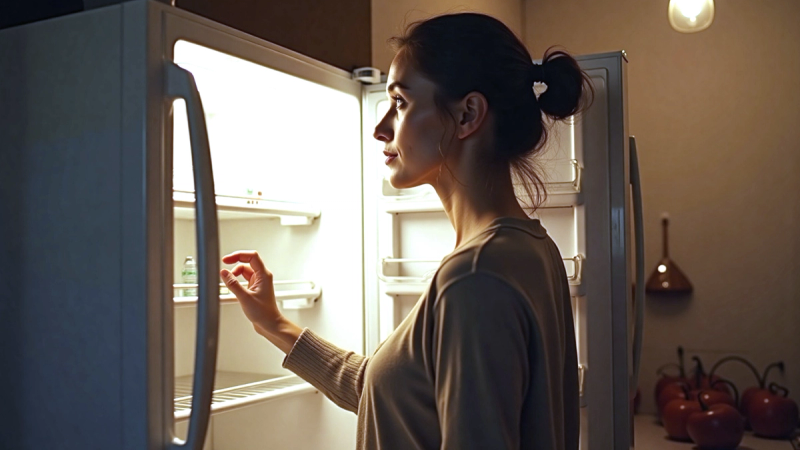
I want to start with a scene many of my clients have described to me in almost identical words: *"I used to love cooking. Now I stand in front of the fridge and feel nothing. I know I liked it once. I just can't get there anymore."*
That gap — between knowing something used to matter and being unable to feel it — has a name. It is called anhedonia, from the Greek *an-* (without) and *hedone* (pleasure). In clinical terms, it is the reduced or absent ability to experience pleasure, motivation, or reward from activities that would ordinarily provide them.
What it is not: laziness, a character flaw, or simply "being in a bit of a slump." And it is not quite the same as burnout or ordinary low mood, although all three can coexist and make each other worse.
Here is the distinction I find most useful in practice. Low mood is a temporary dip in emotional register — you feel sad, flat, or irritable, but if something genuinely good happens, you can still feel it. Burnout is a state of depletion driven by prolonged overload; rest usually moves the needle. Anhedonia is different because the reward mechanism itself has gone quiet. You can sleep a full eight hours, do everything "right," and still find that pleasure simply does not register.
That said, these states are not watertight compartments. Anhedonia frequently travels alongside depression and burnout, and one of the reasons it matters to name it specifically is that the interventions that help are somewhat different.
Two Kinds of Anhedonia You Should Know About
Researchers now draw a useful distinction between two forms, and understanding them changes how you approach recovery.
Consummatory anhedonia refers to reduced pleasure *in the moment* — you eat the meal you used to love, but it tastes like cardboard. You watch the film you have been waiting for and feel unmoved. The experience is happening; the pleasure is not landing.
Anticipatory anhedonia refers to reduced motivation *before* the event — you can no longer feel the pull toward something. There is no sense of "I'm looking forward to this." Nothing on the horizon seems worth reaching for.
In my clinical experience, anticipatory anhedonia is often the more functionally disabling of the two, because it quietly dismantles the scaffolding of daily life. When you cannot anticipate reward, you stop making plans, stop reaching out to friends, stop starting projects. The world gradually empties of magnetic pull.
What It Looks Like Day to Day
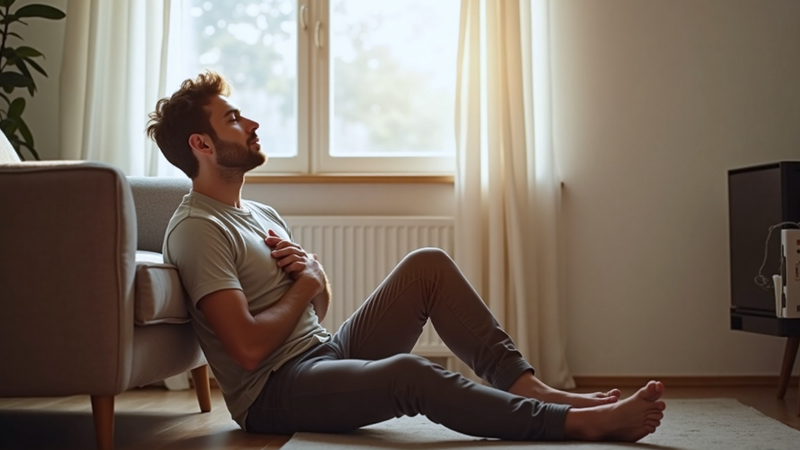
Because anhedonia is an absence rather than a presence, it can be surprisingly hard to spot — both for the person experiencing it and for people around them.
Some of the most common patterns I see:
- Cancelling plans not because you are too tired, but because the idea of going holds no appeal even though you know it "should"
- Going through routines mechanically — eating, washing, working — with no accompanying sense that any of it matters
- Looking back at photographs and recognising happiness you cannot currently access
- Finding that activities you previously used to decompress (music, sport, reading) now feel pointless or effortful for no obvious reason
- Reduced sexual interest or responsiveness
- A flattening of social warmth — you do not dislike the people around you; you simply feel oddly disconnected from them
It is worth noting that people with anhedonia often do not look depressed from the outside. They can appear functional, even productive. The flatness is largely interior.
Why It Happens
Anhedonia has a neurobiological dimension that is worth understanding because it counteracts the tendency to self-blame.
The brain's reward circuitry — particularly the dopaminergic pathways connecting the ventral striatum, prefrontal cortex, and other regions — is responsible for signalling that something is worth approaching and then delivering the experience of pleasure when you get there. Under conditions of chronic stress, depression, or inflammatory processes, these circuits can become less responsive. The signal weakens. The reward simply does not reach the level of awareness.
In depression, anhedonia is one of the two core diagnostic features (alongside persistent low mood), and it is often the symptom that most directly undermines a person's ability to recover, because the things that help — connection, movement, engagement — require some capacity for motivation.
In burnout, prolonged overactivation of the stress response appears to suppress the very reward signals that make work, relationships, and leisure feel meaningful. Anhedonia in this context is sometimes the body's way of withdrawing resources from a system that has been running on empty.
After antidepressants — particularly SSRIs and SNRIs — some people describe a phenomenon sometimes called emotional blunting: a reduction in both negative and positive emotional range. This is different from the original anhedonia but feels very similar. If you recognise this, it is worth raising with your prescribing doctor. It is frequently addressable.
After prolonged stress — even in the absence of a diagnosable disorder — the constant activation of threat responses can crowd out the quieter signals of pleasure and interest. You are not broken. Your system has simply been attending to something else for a very long time.
What Genuinely Helps
I want to be honest here: there is no quick fix, and I will not pretend otherwise. But there are approaches with a solid evidence base, and they work incrementally rather than all at once.
Behavioural activation is one of the most robustly supported interventions for anhedonia, and the key insight is counterintuitive: you do not wait to feel motivated before acting. You act in order to rebuild the experience of reward. The action comes first; the feeling follows, gradually.
Start smaller than feels necessary. If you used to love walking and now the idea of a long walk feels pointless, try five minutes outside. Not to feel better immediately, but to gently re-engage the reward circuitry. Consistency matters more than intensity.
Some steps worth trying:
- Identify activities from your past that carried some sense of pleasure, mastery, or connection — even mild versions count
- Schedule them as appointments, not aspirations — put them in your calendar with the same weight as a meeting
- Notice micro-moments of response: a slight softening, a brief sense of interest. These are data points. Write them down if that helps
- Reduce the barrier to entry — instead of "I will start painting again," try "I will get the paints out and sit with them for ten minutes"
- Social contact in low-demand formats: a short walk with someone rather than a dinner that requires sustained energy
It also matters to reduce the things that suppress reward signalling: chronic sleep deprivation, alcohol, excessive screen time in a passive, scrolling mode. None of these are moral failures; they are simply factors that make the signal quieter.
When to See a Doctor
Please do not try to work through anhedonia alone if it has been present for more than two weeks, if it is accompanied by persistent low mood, changes in sleep or appetite, or thoughts of hopelessness. These are signals that warrant a proper clinical assessment.
Anhedonia can be a feature of several different conditions — depression, bipolar disorder, certain anxiety presentations — and getting the right support means getting the right formulation. A GP is a good starting point. A psychologist or psychiatrist can go further.
If you are already on medication and believe it may be contributing to emotional blunting, that conversation belongs with your prescriber. Do not stop medication without guidance.
References
- 1.American Psychiatric Association. Diagnostic and Statistical Manual of Mental Disorders, Fifth Edition (DSM-5), 2013 (2013)
- 2.Treadway M.T., Zald D.H.. Reconsidering anhedonia in depression: Lessons from translational neuroscience, *Neuroscience & Biobehavioral Reviews*, 2011 (2011)
- 3.Husain M., Roiser J.P.. Neuroscience of apathy and anhedonia: a transdiagnostic approach, *Nature Reviews Neuroscience*, 2018 (2018)
- 4.Dichter G.S.. Anhedonia in unipolar major depressive disorder, *Current Psychiatry Reports*, 2010 (2010)
- 5.Martell C.R., Dimidjian S., Herman-Dunn R.. Behavioral Activation for Depression: A Clinician's Guide, Guilford Press, 2010 (2010)
- 6.Maslach C., Leiter M.P.. Understanding the burnout experience: recent research and its implications for psychiatry, *World Psychiatry*, 2016 (2016)
Frequently Asked Questions

Written by
Valentina Lipskaya
Clinical Psychologist · Gestalt Therapist · CBT Specialist · ICF Certified Coach · MBA Professor
Panic Disorder, Anxiety, CBT & Gestalt Therapy
Valentina Lipskaya is a certified clinical psychologist and gestalt therapist specializing in panic disorders, anxiety, and neurological conditions. With over 15 years in psychology and 7 years of hands-on clinical practice, she has helped more than 750+ clients overcome panic, chronic anxiety, and psychosomatic conditions — without medication. Her work at Dzeny translates evidence-based therapeutic methods into practical, accessible guidance for everyday mental health.