
The Fawn Response: When Keeping the Peace Becomes a Survival Strategy
Fight, flight, freeze — and the fourth one that looks like being nice.
In this article
You Already Know the First Three
Most people, when they first encounter the idea of stress responses, recognise themselves somewhere in fight, flight, or freeze. The person who snaps when cornered. The one who goes quiet and disappears. The one who locks up completely and cannot move or speak. These three patterns have entered everyday conversation, and that familiarity has helped a lot of people make sense of reactions they used to judge harshly in themselves.
But there is a fourth. And it is, in my clinical experience, the hardest one to catch — partly because it does not look like distress at all. It looks like being a good person.
What Fawning Actually Is
The term was introduced by therapist Pete Walker in his work on complex trauma, and it describes a nervous system response built around appeasement. Where fight moves toward the threat, and flight moves away from it, fawn moves *toward* the person who feels threatening — not out of genuine warmth, but out of a body-level calculation that connection is safer than conflict.
It can look like: agreeing before you have even heard the full sentence. Rushing to fix someone else's mood. Laughing off something that actually hurt. Offering help you do not have the bandwidth to give. Saying "I'm fine with whatever you decide" when you are not fine at all.
What ties all of these together is that they are not chosen. They arise before conscious thought has had a chance to weigh in. That is the part I want to emphasise, because people who fawn frequently describe themselves as weak-willed, fake, or people-pleasing by nature. They treat it as a character flaw. It is not. It is a learned nervous system strategy — and at some point in that person's history, it worked. It kept them safe, or at least safer.
Here is how the four stress responses compare when you place them side by side:
| Response | What the nervous system is doing | What it looks like from the outside |
|---|---|---|
| Fight | Moving toward threat to neutralise it | Snapping, defending, arguing, blaming |
| Flight | Moving away from threat to escape it | Going silent, avoiding, leaving, over-working |
| Freeze | Shutting down to reduce the cost of threat | Blanking, dissociating, feeling paralysed |
| Fawn | Appeasing the threat to disarm it | Agreeing, over-helping, pre-empting anger, self-erasing |
Why It Is the Hardest to Spot
The other three responses tend to cause visible friction. A person in fight mode argues; eventually someone points it out. A person in freeze cannot function; it becomes noticeable. Fawn, however, earns praise. The person who always smooths things over, who never makes a fuss, who remembers everyone's preferences and adjusts accordingly — they are often described as thoughtful, easy-going, mature. The response is socially rewarded, which means the feedback loop that would normally signal *something is wrong here* never fires.
This is compounded by the fact that fawning often coexists with genuine care. A person can truly love someone and simultaneously be managing that person's moods to stay safe. Those two things are not mutually exclusive, but they are different, and untangling them takes time and patience with yourself.
How It Shows Up in Real Life
At work, fawning can look like taking on extra tasks to avoid a manager's irritation, never pushing back on a brief even when you can see a problem with it, or over-explaining yourself in emails to pre-empt any possible criticism. One client described spending forty minutes rewriting a single message to her line manager — not because the content was complex, but because she was trying to remove every phrase that might land badly. That is not perfectionism. That is threat management.
In relationships, it often means your partner, friend, or family member rarely encounters your actual preferences. You eat at the restaurant they chose. You watch what they want to watch. When they seem irritable, you scan yourself for what you might have done wrong and set about fixing it, even before they have said a word. Over time this creates a particular kind of loneliness — you are present, but you are not really there.
What Recovery Looks Like
I want to be careful here. Recovery from a deeply ingrained nervous system pattern is not a matter of deciding to stop doing it. If that were possible, people would simply decide. What recovery actually involves is building, gradually and with repetition, a different felt sense of safety — one in which someone's displeasure does not register as danger.
That is slow work. But there are concrete things that help.
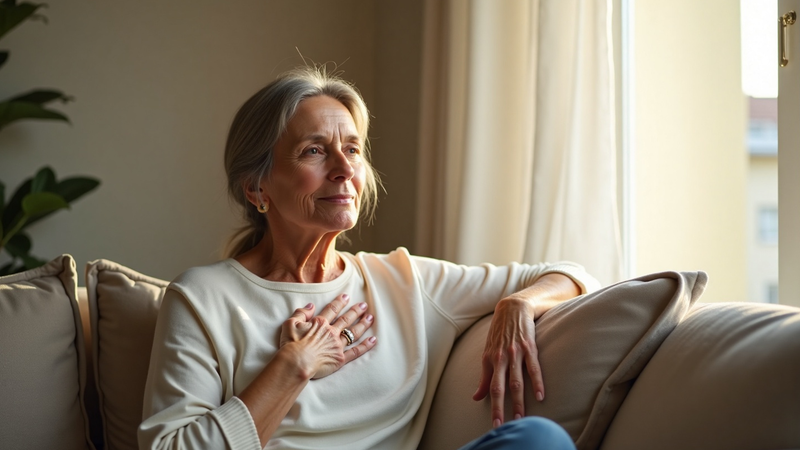
Noticing the body's tell. Fawning has a physical signature, and it is usually faster than thought. For many people it is a sudden deflation — a small collapse in the chest, a loosening of the jaw into a smile that feels performed rather than felt, a shift in posture toward the other person. Learning to catch that moment, not to stop yourself, but just to notice it happened, is the beginning.
Buying time before answering. You do not have to respond in the moment. "Let me think about that" is a complete sentence. "Can I come back to you on that?" is a complete sentence. The pause creates a small gap between the nervous system's first move and your considered response.
Tolerating someone else's discomfort. This is the hardest part. Underneath fawning is usually a belief — often very old, sometimes accurate for an earlier time — that another person's displeasure is dangerous and must be managed. Allowing someone to be disappointed, annoyed, or even briefly hurt by what you need, and staying with that discomfort without rushing to fix it, builds evidence against that belief over time.
Here is a table of specific fawn moments and what a different response could look like:
| Fawn moment | What is driving it | A response to try |
|---|---|---|
| Agreeing before thinking | Fear of conflict if you pause | "That's interesting, let me sit with it" |
| Taking on extra work to avoid irritation | Anticipating anger as threat | "I want to check my capacity before I commit" |
| Apologising for having a preference | Feeling your needs are a burden | State the preference without the apology |
| Laughing off something that hurt | Making it safe for them, not you | Say nothing, notice the hurt privately first |
| Pre-emptively softening a boundary | Rehearsing their upset in advance | Deliver the boundary and wait, without softening |
A Note on Being Kind to Yourself About This
If you have read this and recognised yourself, I want to say something clearly: the pattern developed because it made sense at some point. The nervous system is not irrational. It learned, in some environment, that keeping others comfortable was the condition under which you were safe or loved or valued. That is not a character flaw. That is adaptation.
The work is not to become someone who stops caring about other people. It is to be able to tell, in any given moment, whether your care is freely given or whether it is your body trying to stay alive.
References
- 1.Walker, P.. Complex PTSD: From Surviving to Thriving, 2013 (2013)
- 2.Porges, S. W.. The Polyvagal Theory: Neurophysiological Foundations of Emotions, Attachment, Communication, and Self-Regulation, 2011 (2011)
- 3.Herman, J. L.. Trauma and Recovery, 1992 (1992)
- 4.Cannon, W. B.. Bodily Changes in Pain, Hunger, Fear and Rage, 1915 (1915)
- 5.Firth, J., Torous, J., Nicholas, J., et al.. The efficacy of smartphone-based mental health interventions for depressive symptoms: a meta-analysis of randomized controlled trials, World Psychiatry, 2017 (2017)
Frequently Asked Questions

Written by
Valentina Lipskaya
Clinical Psychologist · Gestalt Therapist · CBT Specialist · ICF Certified Coach · MBA Professor
Panic Disorder, Anxiety, CBT & Gestalt Therapy
Valentina Lipskaya is a certified clinical psychologist and gestalt therapist specializing in panic disorders, anxiety, and neurological conditions. With over 15 years in psychology and 7 years of hands-on clinical practice, she has helped more than 750+ clients overcome panic, chronic anxiety, and psychosomatic conditions — without medication. Her work at Dzeny translates evidence-based therapeutic methods into practical, accessible guidance for everyday mental health.