

Postpartum Depression: Signs, Causes, and How to Find Your Way Back
Postpartum depression is common, treatable, and not your fault. Signs vs. the baby blues, and evidence-based ways to recover.
In this article
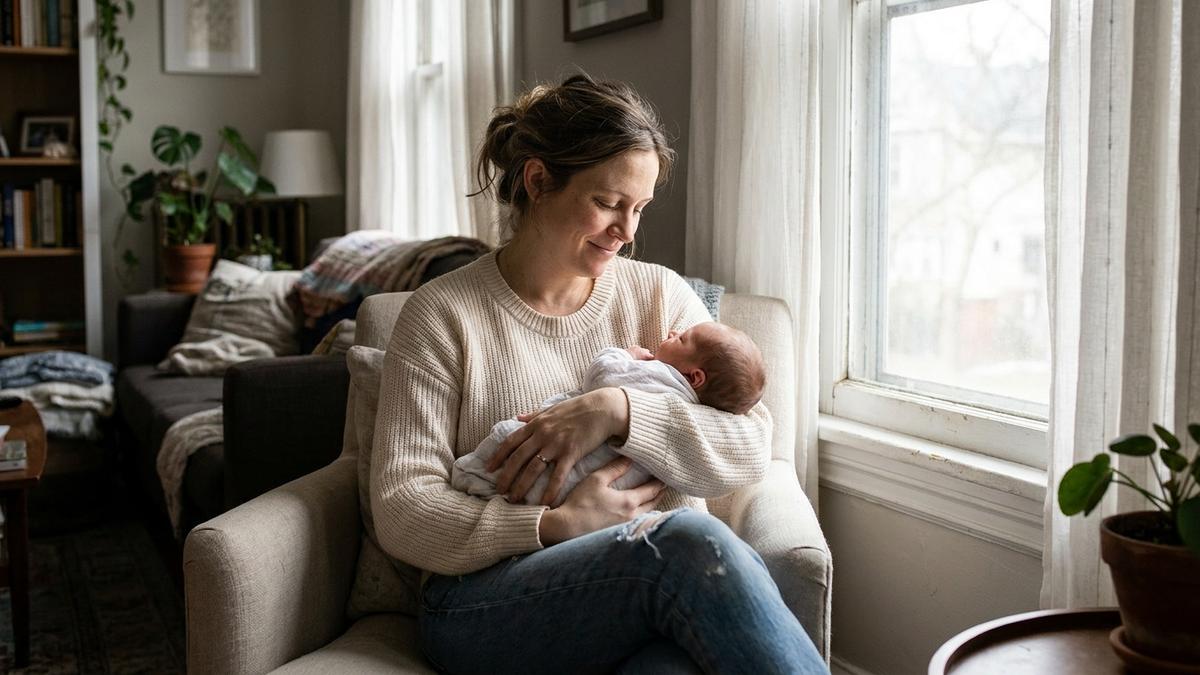
Everyone told you this would be the happiest time of your life. Instead, you feel numb, anxious, tearful, or strangely disconnected from your baby — and then guilty for feeling that way. If this is you, please hear this first: it is not your fault, you are not a bad parent, and you are not alone. What you're describing may be postpartum depression (PPD), a common and highly treatable medical condition — not a character flaw or a failure of love.
Postpartum depression affects roughly 1 in 7 new mothers, and it can affect fathers and non-birthing partners too. That number is worth sitting with for a moment. If you picture any group of new parents — a prenatal class, a hospital ward, the people you follow online who seem to be doing fine — a meaningful share of them are quietly going through some version of what you're going through. The smiling photos rarely show it, which is exactly why so many parents assume they're the only one. You're not.
This article explains what PPD actually is, how it differs from the ordinary "baby blues," the signs to watch for, why it happens, and — most importantly — the evidence-based ways people recover and feel like themselves again. Read it at your own pace. You don't have to absorb everything at once, and you don't have to have it all figured out today.
What Is Postpartum Depression?
Postpartum depression is a form of clinical depression that begins during pregnancy or in the weeks and months after childbirth. It's driven by a mix of hormonal, physical, and emotional changes — not by weakness or by "not loving your baby enough." It is recognized in the DSM-5 as a major depressive episode with peripartum onset, which is another way of saying: this is a documented medical condition that clinicians are trained to recognize and treat, not a mood you're failing to manage on willpower.
One of the cruelest things about PPD is how it hides behind ordinary explanations. You're tired because newborns don't sleep. You're weepy because your hormones are "all over the place." You're overwhelmed because caring for a baby is genuinely hard. All of that can be true — and PPD can still be present underneath it. The condition doesn't announce itself with a label. It shows up as a slow erosion of the parts of you that used to feel like you.
Baby blues vs. postpartum depression
Up to 80% of new mothers get the "baby blues" — a few days of tearfulness, mood swings, and overwhelm that peak around day 3–5 and fade within two weeks. Postpartum depression is different: it's more intense, lasts longer than two weeks, and interferes with daily functioning and bonding. If low mood isn't lifting after the first couple of weeks, it deserves attention.
A helpful rule of thumb is to notice the *shape* of what you're feeling, not just its presence. With the baby blues, you can still be moved by your baby — you cry, but you also laugh; you're overwhelmed, but glimpses of joy break through. With PPD, those glimpses tend to go quiet. The feeling isn't a passing wave; it becomes the weather. If you find yourself thinking, "It's been three weeks and I still feel like this," or "I keep waiting to feel better and I don't," that gap between expectation and reality is a signal worth taking seriously.
It can start later than people expect
PPD doesn't always appear right after birth. It can emerge any time in the first year — often when the initial support fades and exhaustion sets in. Late onset is still postpartum depression, and it still deserves care.
Consider a common scenario: for the first six weeks, family visited, meals appeared, and someone was always there to hold the baby so you could shower or nap. Then everyone went back to their own lives, your partner returned to work, and the house went quiet. That's precisely when many parents hit a wall. If depression arrives at month four or month eight rather than week one, it's easy to dismiss it as "I should have adjusted by now." You shouldn't have to talk yourself out of getting help based on the calendar. The timing doesn't make it less real.
Signs and Symptoms of Postpartum Depression
Symptoms vary, but commonly include:
- Persistent sadness, emptiness, or hopelessness
- Loss of interest or pleasure in things you used to enjoy
- Severe fatigue, or trouble sleeping even when the baby sleeps
- Feeling disconnected from your baby, or intense anxiety about them
- Irritability, anger, or restlessness
- Overwhelming guilt, shame, or feelings of worthlessness
- Difficulty concentrating or making decisions
- Changes in appetite
- Thoughts that you're a bad parent — or thoughts of harming yourself or the baby
Not everyone experiences PPD as sadness. For some parents it looks like rage — snapping at a partner over something small, feeling a surge of irritation at the baby's crying and then drowning in shame about it. For others it's a flat, gray numbness: you go through the motions of feeding and changing and rocking, but you feel like you're watching yourself from behind glass. Some parents describe it as the disappearance of anticipation — nothing to look forward to, no future that feels warm. If any of these describe you better than "sad" does, that doesn't mean you're the exception. It means PPD wears more than one face.
The exhaustion of PPD is also worth naming on its own, because it's more than newborn tiredness. It's the kind of fatigue where rest doesn't restore you. You might lie awake, wired and anxious, during the precious window when the baby is finally asleep — and then feel destroyed the next day. That specific pattern, being unable to sleep even when you have the chance, is a classic depression signal, not just a scheduling problem.
That last symptom on the list matters most: if you have thoughts of harming yourself or your baby, treat it as urgent and reach out to a doctor or a crisis line right now. These thoughts are a symptom, not a verdict on who you are. Many loving, devoted parents have intrusive, frightening thoughts and would never act on them — but you don't have to sort out on your own which thoughts are "just" intrusive and which need immediate attention. That's exactly what doctors and crisis lines are there for. Reaching out early is always the safe choice, and it is never an overreaction.
Why It Happens: Causes and Risk Factors
There's no single cause — PPD comes from several forces stacking up at once. Picture it less as one broken thing and more as several strands pulling in the same direction: biology, circumstance, history, and support all leaning on each other.
Hormonal and physical changes
After birth, estrogen and progesterone drop sharply, thyroid levels can shift, and the body is recovering from a major physical event on very little sleep. This biological storm alone can tip mood into depression.
It helps to grasp the scale of the hormonal shift. During pregnancy, some of these hormones climb to levels many times higher than normal — and then, within days of delivery, they crash. Very few other experiences in adult life involve a biochemical change that dramatic and that fast. On top of that, thyroid changes can quietly mimic depression, which is one reason doctors sometimes check thyroid function when a new parent isn't feeling right. Add chronic sleep deprivation — a known trigger for low mood in anyone — and it becomes obvious why this is a vulnerable window for the brain, no matter how strong or prepared you are.
Emotional and life factors
Risk rises with a personal or family history of depression or anxiety, a difficult pregnancy or birth, a colicky or unwell baby, financial or relationship strain, and lack of support. Isolation is a big one — new parenthood can be profoundly lonely, and loneliness and low mood feed each other.
A traumatic or frightening birth deserves special mention here. If your delivery went differently than planned — an emergency intervention, a scare with the baby's health, a feeling of not being listened to — that experience can leave a mark that shows up weeks later as anxiety, flashbacks, or depression. It doesn't mean you're ungrateful that your baby is here. Two things can be true at once: you can love your child completely and still be carrying an unhealed wound from how they arrived.
The weight of "supposed to"
There's another factor that rarely makes clinical checklists but shapes how deeply PPD digs in: the enormous pressure to perform happiness. Culture treats new parenthood as a scripted moment of pure joy, and social media amplifies the highlight reel. When your inner reality doesn't match that script, the mismatch itself becomes a source of shame — and shame is depression's fuel. You end up depressed *and* depressed about being depressed. Recognizing this second layer matters, because a huge part of recovery is giving yourself permission to have a hard time without treating it as evidence of a defect.
It is nobody's fault
Having risk factors doesn't mean you did anything wrong. PPD happens to loving, capable, prepared parents every day. Naming the causes isn't about blame — it's about understanding what to address. Think of the list of risk factors the way you'd think of risk factors for any illness: they tell you where support might help, not who's to blame for getting sick.
Postpartum Depression vs. Postpartum Anxiety
They often travel together but aren't identical. PPD centers on low mood, numbness, and hopelessness. Postpartum anxiety centers on relentless worry — racing thoughts, intrusive fears about the baby's safety, physical tension, and an inability to relax even when things are fine. Many parents have both. If your primary experience is dread and feeling overwhelmed by anxiety, that's just as valid a reason to seek support. Depression and anxiety are also more closely connected than most people realize.
In practice, postpartum anxiety can look like checking that the baby is still breathing far more often than the situation calls for, being unable to hand the baby to anyone else, or lying awake running through worst-case scenarios on a loop. It can feel like your mind has appointed itself a full-time security guard that never clocks off. Where depression often drains energy and interest, anxiety floods you with too much of both — a jittery, can't-sit-still vigilance. Knowing which pattern dominates for you can help a clinician tailor support, but you don't need to self-diagnose the difference before reaching out. Both respond well to care.
How Postpartum Depression Is Treated
The most important message: PPD is highly treatable, and most parents fully recover. This isn't a condition you're meant to simply endure until it passes. There are concrete, well-studied paths back, and you're allowed to use them.
Therapy
Talk therapy — especially cognitive behavioral therapy (CBT) and interpersonal therapy — is a first-line treatment with strong evidence. It helps you untangle the guilt-and-worthlessness spiral and rebuild coping skills.
CBT works, in part, by teaching you to catch the automatic thoughts that PPD produces on repeat — thoughts like "I'm ruining my baby's life" or "everyone else can do this but me" — and to examine them rather than accept them as fact. Over time you learn to notice the thought, question the evidence for it, and replace it with something truer and kinder. Interpersonal therapy, meanwhile, focuses on the relationship shifts and role changes that come with a new baby, which are often a bigger part of the distress than parents expect. Neither approach asks you to "think positive." They give you tools to think *accurately*, which is very different when depression has been distorting the picture.
Medication when needed
Antidepressants can be safe and effective, including for many who are breastfeeding. This is a conversation to have with a doctor — the goal is a plan that fits your situation.
Many parents hesitate here, worried that needing medication means they've failed, or fearful about breastfeeding while taking it. Both concerns deserve a real conversation rather than silent worry. Needing medication for a brain that's in a depressive episode is no more a failure than needing insulin or antibiotics; it's treating a medical condition with a medical tool. And your doctor can talk you through the current evidence on specific medications and breastfeeding, so you can make an informed choice together rather than guessing alone at 3 a.m.
Support and self-care basics
Sleep (in shifts if possible), gentle movement, nutrition, and — crucially — accepting help. Peer support groups reduce the isolation that fuels PPD. None of this replaces treatment, but all of it supports recovery.
Of these, protecting sleep is often the single highest-leverage change, and it usually requires other people. If a partner, family member, or friend can take a night feed or a morning shift so you get one longer, unbroken stretch of sleep, the effect on mood can be surprisingly large. This is also where accepting help becomes a genuine act of recovery rather than a weakness. Saying "yes, please bring dinner" or "yes, please hold the baby while I nap" isn't giving up — it's building the scaffolding that lets you heal.
How Partners and Loved Ones Can Help
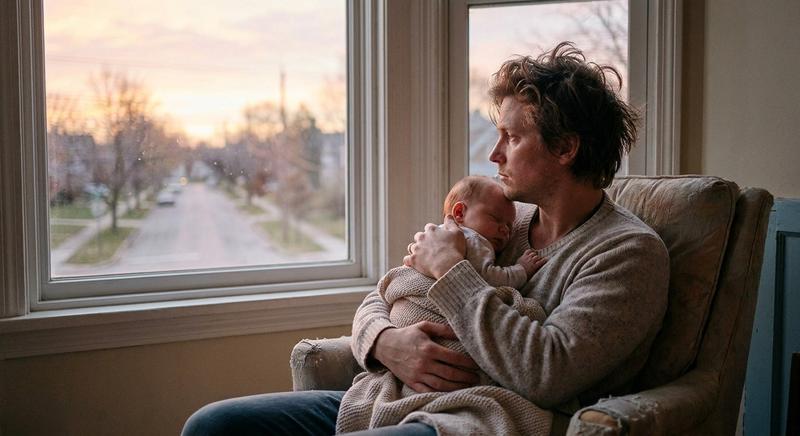
If someone you love has PPD: take practical load off them (night feeds, chores, appointments), listen without trying to "fix," never say "just be grateful," and gently help them access care. Partners can develop PPD too — around 1 in 10 fathers experience postpartum depression — so watch your own mental health as well.
The most useful thing you can offer is often specific, not general. "Let me know if you need anything" quietly puts the work of asking back onto someone who has no spare capacity. "I'm taking the baby from 6 to 8 so you can sleep — no need to decide anything" removes that burden entirely. Similarly, when they share how they feel, resist the urge to reassure them out of it ("but you're such a good mom!"). Reassurance can accidentally feel like being told their reality is wrong. Simply reflecting back — "that sounds exhausting, and I believe you" — often lands as far more supportive. And keep gently pointing toward professional care, offering to book the appointment or come along, without pressure or shame.
How AI Support Can Help
Postpartum days and nights don't follow office hours, and the loneliest moments — 3 a.m. feeds, the guilt spirals, the days you can't put into words — rarely line up with a scheduled appointment. Dzeny is a mental-health support app grounded in CBT principles, available 24/7 by voice and text. It's a private place to offload what you're feeling, catch the harsh "I'm a bad parent" thoughts, and get gentle, evidence-based coping support between visits with a professional.
Part of what makes those small-hour moments so hard is that there's often no one awake to talk to, and the last thing you want is to wake an already-exhausted partner or bother a friend again. Being able to say the thing out loud — even to an app — can take some of the pressure out of the spiral, and CBT-based prompts can help you notice when your tired brain is treating a passing thought as a permanent truth. For a lot of parents, the value isn't a dramatic breakthrough; it's simply not being alone with the worst thought at the worst hour, and having something steady to steer you back toward sleep, toward perspective, toward the next feed.
To be clear: an app is a companion, not a replacement for medical care — especially with PPD. But as a first step, or as support alongside treatment, it can help you feel less alone at the hardest hours. In a clinical study with Synergy University Dubai, 280 adults over 8 weeks showed a 43% reduction in anxiety symptoms, and today more than 48,000 people use Dzeny for everyday support.
The Road Back: What Recovery Looks Like
Recovery usually isn't a switch — it's a gradual return. The numbness lifts, small pleasures come back, the bond with your baby deepens, and the guilt loosens its grip. With the right support, the vast majority of parents recover fully and go on to enjoy parenthood. Reaching out isn't a sign that you're failing — it's one of the strongest, most loving things you can do, for yourself and your child.
Because it's gradual, recovery can be hard to notice while it's happening. Progress often shows up first in small, easy-to-miss ways: you laugh at something and it feels real; you look forward to a walk; the crying doesn't spike your dread quite as high as it did last week. There will still be bad days mixed in — recovery is rarely a clean upward line — and a hard day after a good one doesn't mean you've lost your progress. It helps to track the trend rather than any single day, and to let the people supporting you reflect back the changes you might be too close to see.
Be patient and kind with yourself
If there's one thing to carry out of this article, let it be this: the way you'd speak to a friend going through PPD is the way you deserve to speak to yourself. You would never tell that friend she was weak, or that she should be grateful, or that she's ruining her child. You'd tell her she's doing something incredibly hard, that this is an illness and not her fault, and that she's going to get through it. Turn that voice inward. Self-compassion isn't a luxury during recovery — it's part of the medicine.
Conclusion
Postpartum depression is common, it's caused by real biological and life factors rather than any failing on your part, and it responds very well to treatment. Know the signs, take low mood that lasts beyond two weeks seriously, and reach out — to a doctor, a loved one, or a support tool. You deserve care, you will feel like yourself again, and asking for help is where recovery starts. Whatever this stretch of parenthood has felt like so far, it is not the whole story, and it is not permanent. Better days are on the way, and you don't have to reach them alone.
Frequently Asked Questions (FAQ)
What is postpartum depression in simple terms?
It's a form of clinical depression that starts during pregnancy or after childbirth, driven by hormonal, physical, and emotional changes. It's more intense and longer-lasting than the "baby blues" and interferes with daily life and bonding. It's a recognized medical condition, not a sign of weakness or of not loving your baby.
How is postpartum depression different from the baby blues?
The baby blues affect most new mothers, peak around days 3–5, and fade within two weeks. PPD is more severe, lasts longer than two weeks, and disrupts functioning — and it needs support, not just time. A useful clue is that the baby blues still let joy break through, while PPD tends to flatten those moments out.
How long does postpartum depression last?
Untreated, it can persist for many months. With treatment — therapy, sometimes medication, and support — most people improve significantly and recover fully. It can begin any time in the first year after birth, so late onset is still worth treating.
Can fathers or partners get postpartum depression?
Yes. Around 1 in 10 fathers experience postpartum depression, and non-birthing partners can too. Their symptoms matter and deserve care as well, and their mental health also affects the whole family's wellbeing.
What are the early warning signs I should watch for?
Low mood, emptiness, or hopelessness that doesn't lift; loss of interest in things you used to enjoy; trouble sleeping even when the baby sleeps; intense anxiety about the baby or a sense of disconnection from them; and overwhelming guilt or worthlessness. If these last beyond two weeks or interfere with daily life, it's time to reach out.
When should I get help for postpartum depression?
If low mood, anxiety, or disconnection lasts more than two weeks, interferes with daily life, or includes any thoughts of harming yourself or your baby — reach out right away. Thoughts of self-harm are a medical emergency; contact a doctor or a crisis line immediately.
How can my partner or family best support me?
Concrete help works better than open-ended offers: taking specific shifts, handling chores and appointments, and protecting your sleep. Emotionally, being listened to and believed helps more than being reassured out of your feelings. Gentle, practical help getting to professional care — booking the appointment, coming along — makes a real difference.
Can an app like Dzeny help with postpartum depression?
It can help as a 24/7 companion — offloading feelings, catching harsh thoughts, and offering CBT-based coping support between appointments, including during the isolating small-hour moments. It is not a replacement for medical care, which is essential for PPD, but it can be a supportive first step.
If low mood is the bigger part of this, the PHQ-9 Depression Test is the standard nine-question screen.
Credible Sources and References
- American Psychiatric Association. DSM-5: Depressive Disorders, Peripartum Onset.
- O'Hara, M. W., & McCabe, J. E. (2013). Postpartum Depression: Current Status and Future Directions. *Annual Review of Clinical Psychology.*
- Centers for Disease Control and Prevention (CDC) — Depression Among Women.
- World Health Organization (WHO) — Maternal Mental Health.
- Paulson, J. F., & Bazemore, S. D. (2010). Prenatal and Postpartum Depression in Fathers. *JAMA.*
Disclaimer: This article is for informational and educational purposes only and is not a substitute for professional medical advice. If you are struggling — especially with any thoughts of harming yourself or your baby — please contact a doctor or a crisis line immediately.

Written by
Valentina Lipskaya
Clinical Psychologist · Gestalt Therapist · CBT Specialist · ICF Certified Coach · MBA Professor
Panic Disorder, Anxiety, CBT & Gestalt Therapy
Valentina Lipskaya is a certified clinical psychologist and gestalt therapist specializing in panic disorders, anxiety, and neurological conditions. With over 15 years in psychology and 7 years of hands-on clinical practice, she has helped more than 750+ clients overcome panic, chronic anxiety, and psychosomatic conditions — without medication. Her work at Dzeny translates evidence-based therapeutic methods into practical, accessible guidance for everyday mental health.