

Why Your Team Losing Hurts So Much: The Psychology of Being a Football Fan
The psychology behind why a football defeat hits so hard — identity, belonging, and how to cope when your team loses.
In this article
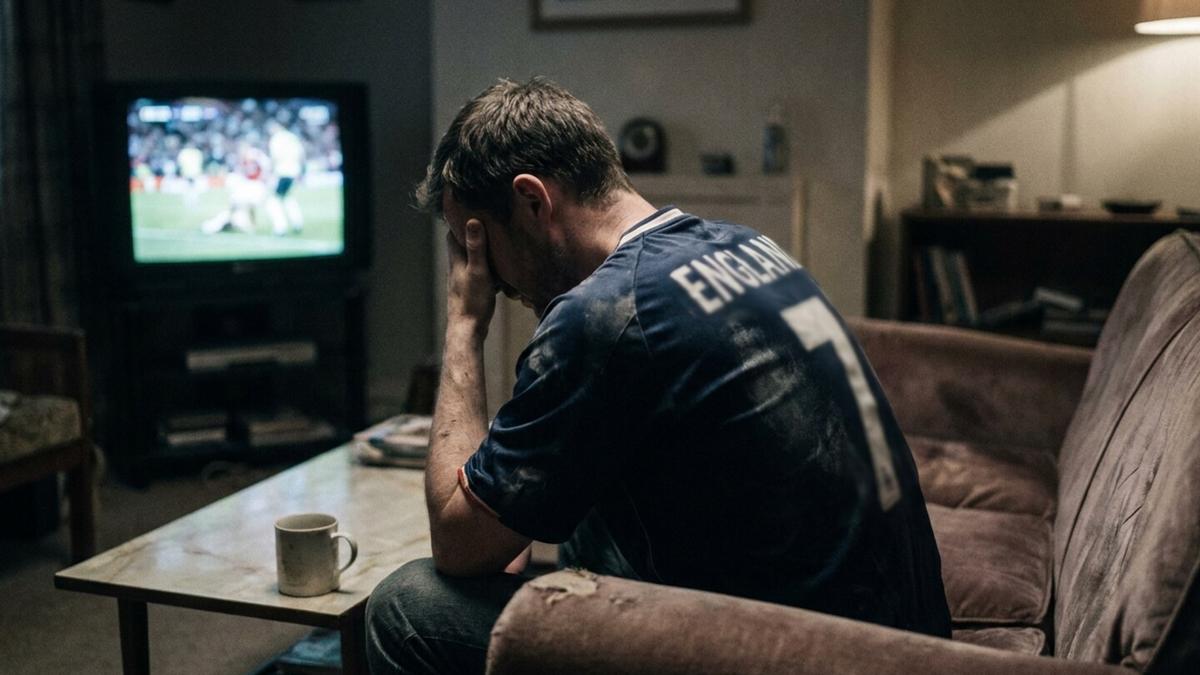
The final whistle blows. Your team is out of the World Cup. And even though you never touched the ball, never trained a single day, and have no financial stake in the outcome, something inside you drops. Your chest tightens. Your mood curdles. You barely sleep. For the next few days a low grey cloud follows you around, and part of you feels slightly ashamed for caring this much about twenty-two strangers chasing a ball across grass on the other side of the world.
If that describes you right now, I want to say something clearly before anything else: you are not being ridiculous, and you are not broken. The pain you feel is real, it is measurable, and it follows the same neural and psychological pathways your brain uses for losses that everyone agrees are "serious." This article is about why a team you love losing can hurt like a personal defeat, why it can ache for days rather than minutes, when that devotion is healthy and when it quietly turns against you, and what you can actually do to move through the letdown with your emotional footing intact.
Your Brain Doesn't Know It's "Just a Game"
We like to tell each other that sport is entertainment, a diversion, something that shouldn't matter. And on a rational level, that's true. But the parts of your brain that generate emotion did not get that memo, and they never will.
The threat and reward machinery treats it like the real thing
When your team is on the edge of winning, your brain floods with dopamine and your heart rate climbs, the same anticipatory reward response you'd get from any high-stakes moment in your own life. When they lose, that anticipated reward is snatched away, and the drop produces a genuine stress response: elevated cortisol, a dip in mood, disrupted sleep. Research on fans has repeatedly found measurable hormonal shifts tied to their team's results, with testosterone and cortisol moving in fans almost as if they had competed themselves. Your body, in other words, is not pretending. It is reacting to a loss it experienced as its own.
This is why "it's just a game" lands so uselessly when someone says it to you. Your prefrontal cortex knows it's a game. Your limbic system, the older emotional core underneath, is running the ancient program for gain and loss, belonging and exclusion, and it does not distinguish between the tribe on the pitch and the tribe you were born into.
Mirror neurons make you play every pass
Part of why watching feels so visceral is a system in your brain sometimes described through mirror neurons, cells that fire both when you perform an action and when you watch someone else perform it. When you see a striker sprint, twist, and strike, your motor and emotional circuits light up as if you were doing it yourself, in a muted but real way. You flinch at the missed penalty. Your legs tense on the counter-attack. You are not a passive spectator; on a neural level you are, in a small way, on the field. So when the field delivers heartbreak, you take the hit with the players. Their collapse is partly rehearsed inside your own body.
Social Identity Theory: The Team Is Part of You
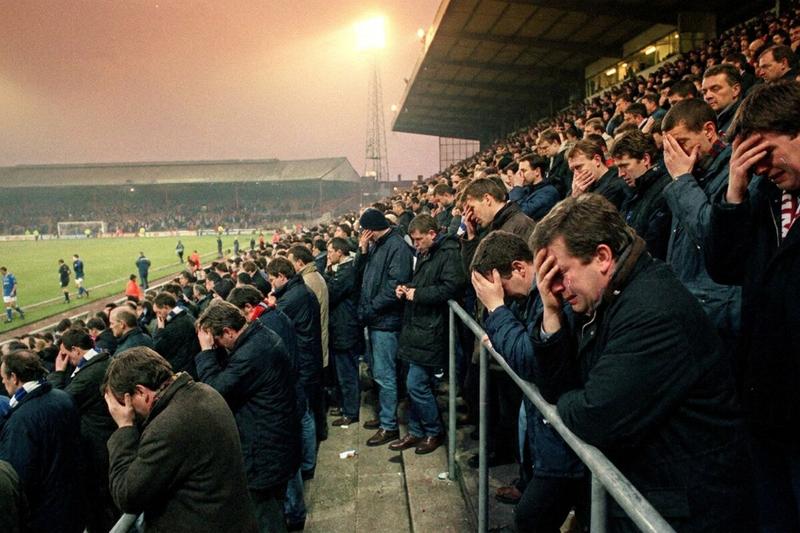
To understand why a defeat feels personal, we have to talk about who you think you are. And the honest answer, according to decades of psychology, is that a meaningful part of your identity is not "you" at all. It's the groups you belong to.
We are our groups
In the 1970s and 80s, psychologist Henri Tajfel and his colleagues developed social identity theory, which showed that people derive a real portion of their self-esteem and self-concept from the groups they identify with, their nation, their city, their profession, their team. We sort the world into "us" and "them" astonishingly easily, and once we've placed ourselves inside an "us," that group's fortunes become our fortunes. When your team wins, you say "we won." When they lose, you feel diminished, because a part of your self-image just took the hit alongside them.
This is not a character flaw. It is one of the most well-documented features of the human mind. We are built to belong, and belonging means that the group's status rises and falls inside us. A World Cup exit isn't just your team's failure; on some level it registers as a demotion of a group you are proud to be part of, and therefore a small demotion of you.
BIRGing, CORFing, and the Monday after
Sports psychologists have names for the everyday behaviours this produces. "Basking in reflected glory" (BIRGing) is why you wear the shirt after a win and say "we" more often. "Cutting off reflected failure" (CORFing) is why, after a painful loss, some fans distance themselves, "they played terribly," suddenly "they" rather than "we." Both are your mind trying to protect your self-esteem from the group's result. Neither makes you shallow. They're evidence of how deeply the group has become woven into your sense of self, so deeply that your ego reaches for defences when the group falls.
Identity Fusion: When "We" Becomes Indistinguishable From "Me"
Social identity explains ordinary fandom. But some of us feel something stronger, a bond so tight that the boundary between the self and the group seems to dissolve. Psychologists call this identity fusion.
The deepest kind of belonging
The anthropologist Harvey Whitehouse and psychologist William Swann described identity fusion as a visceral sense of oneness with a group, where personal identity and group identity become functionally the same thing. Fused fans don't just support the team; they experience the team as an extension of their own body and biography. Studies of die-hard football supporters have found levels of fusion comparable to what people feel toward their own family. Some fused fans report they would endure real personal sacrifice for the group, not as a slogan but as a felt truth.
If you are one of these fans, a defeat doesn't feel like disappointment about an external event. It feels like something happened to you. That is why the grief can be so disproportionate to the "importance" of the match, because for a fused fan, the match isn't external at all.
Why fusion often forms in hard times
Fusion tends to be forged by shared intense experience, especially shared suffering. Years of near-misses, painful losses, cold away days, and collective heartbreak don't weaken the bond; they weld it. This is the strange paradox of deep fandom: the very losses that hurt you are often what made you love the club so completely in the first place. The pain is not a bug in your attachment. It's the fingerprint of it.
Why It Feels Like Grief, and Why It Lasts for Days
People are often surprised not just that a loss hurts, but that it lingers. You expected to feel bad for an evening. Instead it's Wednesday and you're still flat. There are good reasons for that.
Loss is loss to the brain
Grief, at its core, is the mind adjusting to a future that will no longer happen. When your team is knocked out, a whole imagined future evaporates in an instant: the semi-final you'd already pictured, the final you'd taken the day off for, the version of this summer where your team lifts the trophy. Your brain had quietly invested in that future, and now it has to be dismantled and mourned. That is genuinely grief-shaped, even if it sits far down the scale from losing a person. The mechanism is recognisably the same: reality has diverged painfully from what you were attached to.
The rumination loop
Losses hurt longer than wins feel good, a well-established asymmetry called loss aversion, the pain of a loss is psychologically heavier than the pleasure of an equivalent gain. On top of that, defeats trigger rumination: your mind replays the missed chance, the refereeing decision, the substitution that never came, searching for a version where it went differently. Every replay reopens the wound. This is the same cognitive machinery that keeps people stuck after everyday setbacks, and if you're prone to it, a big sporting loss can hook straight into it. If you notice that same relentless mental replaying spilling into other parts of your life, our guide to feeling overwhelmed by anxiety symptoms walks through how to recognise the pattern and interrupt it.
The community amplifier
You don't grieve a defeat alone, and that cuts both ways. Being surrounded, in person or online, by thousands of others processing the same loss can be enormously comforting: shared sorrow is lighter sorrow. But a raw, angry, blame-hunting fan environment can also keep the wound inflamed, feeding rumination and turning sadness into bitterness. The community that makes fandom meaningful can either help you heal or hold you in the hurt, depending on which corner of it you spend the next few days in.
When Fandom Is Healthy, and When It Tips Into Harm
None of this means caring deeply is a problem. For most people, passionate fandom is one of the genuinely good things in modern life. The question is not whether you care, but how your caring behaves when things go wrong.
The healthy side of the ledger
Belonging to a fan community is a real, protective form of social connection, and social connection is one of the strongest predictors of wellbeing we have. Fandom gives you ritual, shared identity, a reliable topic of warmth with strangers, and a socially sanctioned place to feel big emotions out loud. Crying at a match, roaring at a goal, hugging someone you've never met, these are rare permissions in a culture that often asks us to stay contained. Even the heartbreak is a sign of a heart that's engaged with something bigger than itself. Loneliness quietly harms people, and a genuine sense of belonging is part of the antidote; we explore that link in depth in anxiety and loneliness.
The warning signs
Fandom tips from healthy into harmful when it stops giving you connection and starts taking your stability. Some honest signals to watch for:
- The loss bleeds into everything. A bad mood for a day is normal. Days of genuine depression, being unable to work, snapping at people you love, or dreading facing the world, that's more than a match should take from you.
- Your self-worth rides entirely on results. If a defeat makes you feel worthless as a person, not just disappointed as a fan, the team has been asked to carry more of your identity than any team can safely hold.
- It fuels aggression or self-destruction. Rage at family, reckless drinking to numb the loss, or aggression toward rival fans are signs the emotion has slipped its safe container.
- You can't let it go. Weeks later, still ruminating, still low, still unable to enjoy things, especially if it's mixing with other stresses.
That last point matters most, because a sporting loss rarely arrives in isolation. Often it lands on top of work pressure, relationship strain, or a mood that was already fragile, and it becomes the thing that tips a stretched system over. If that's you, the defeat isn't really the problem; it's the last straw on a load that was already too heavy. Persistent low mood after a setback can also shade into something that needs more attention, and understanding the relationship between anxiety and depression can help you tell an ordinary slump from something worth taking seriously.
How to Cope With the Emotional Letdown
So your team is out and you feel awful. What actually helps? Not "get over it," and not "it's just a game." Here's what tends to genuinely work.
Let yourself feel it, and name it
The fastest way to prolong an emotion is to argue with yourself about whether you're allowed to have it. You are. Say it plainly, even just to yourself: *I'm genuinely gutted, and that's a normal response to losing something I care about.* Naming an emotion accurately, sad, grieving, deflated, actually reduces its intensity; brain imaging shows that putting feelings into words calms the emotional centres. Validation isn't indulgence. It's the first step out.
Set a container around the grief
Give the disappointment real space instead of pretending it isn't there, but give it edges. Let yourself be sad tonight and tomorrow. Watch the highlights if you need to, talk it through with a fellow fan, feel the whole thing. And then set a soft horizon, a point after which you gently start redirecting attention back to your own life. Grief needs room, but it also needs a door out.
Move your body and protect your sleep
A stress response is physical, so discharge it physically. A walk, a run, a workout, anything that lets the cortisol burn off will shift your mood faster than sitting still and replaying the game. And guard your sleep hard for the next few nights, because poor sleep and low mood feed each other, and a loss that costs you rest will hurt for longer than one that doesn't.
Reconnect with the people, not just the result
The best of fandom was never really the trophy. It was the shared experience, the group chat, the friend you always watch with, the ritual. Turn toward those people now, precisely when it hurts. Reframe the season around what it gave you, the drama, the belonging, the collective heartbeat, rather than only the outcome it denied you. And keep the loss in proportion: name three things in your actual life that are still exactly as good today as they were before the whistle. The team lost. Your life, almost certainly, did not.
How AI Support Can Help
Sometimes the feelings a loss stirs up run deeper than the match, and talking to a fellow fan isn't quite enough. Maybe the defeat has tangled itself into stress you were already carrying, or the low mood is lingering in a way that worries you, or you simply want somewhere to put the feelings at 1 a.m. when everyone else is asleep. This is where having support in your pocket makes a real difference.
Dzeny is an AI-powered mental health companion designed to be there in exactly these moments. It's private, available whenever you need it, and built on evidence-based approaches like cognitive behavioural techniques and mindfulness, so it doesn't just listen, it helps you work through what you're feeling. You can talk through the disproportionate sadness, get help untangling why a game hit so hard, and learn practical tools to steady rumination before it takes over your week. More than 48,000 people use Dzeny, turning to it for the ordinary hard days as much as the dramatic ones.
And the approach is backed by real results. In a clinical study with Synergy University Dubai, 280 adults over 8 weeks showed a 43% reduction in anxiety symptoms. That's the kind of steady, measurable change that matters, not just when your team goes out of a tournament, but across all the pressures that a single bad night can amplify. If work is part of what's making everything feel heavier right now, Dzeny can help you address that too; our guide on work stress shows how the same tools apply when the pressure is coming from your job rather than the pitch.
The Bigger Picture
Here's what I'd most want you to take from all of this. The fact that a football result can move you this much is not evidence that something is wrong with you. It's evidence of something quite beautiful: that you are capable of belonging, of loving something outside yourself, of tying your heart to a community and a shared story. Those are the same capacities that let you love people, commit to causes, and feel part of something larger than your own small life. Fandom is just one of the safer, more joyful places we get to practise them.
The hurt of a defeat is the tax you pay on caring, and caring is not a mistake. In a world that often pushes us toward detachment and cool irony, being the kind of person who can be genuinely devastated by a game is, quietly, a strength. The goal was never to care less. It's to hold what you care about in proportion, to let the joy and the heartbreak flow through you without letting either one run your life. Feel it fully. Then look up, remember the people beside you and the life around you, and let the world be bigger than the scoreline. There's always another tournament. And the capacity to love it that much is worth protecting.
Conclusion
Your team losing hurts because your brain, your body, and your sense of self were never treating it as "just a game." Social identity theory tells us your team is genuinely part of who you are; identity fusion explains why, for the most devoted fans, its defeat feels like something that happened to them personally; and your neural reward and grief systems process the loss as real, which is why it can ache for days rather than minutes. That pain is normal, it's human, and in most cases it's the price of a healthy, connecting passion.
The work is simply to feel it honestly, give it room and then a boundary, look after your body and your sleep, lean on your community, and keep the loss in proportion to a life that is still whole. And if the letdown reaches deeper than the match, or lands on top of stress that was already too much, you don't have to carry it alone. Support is there when you need it, at the final whistle and long after.
Frequently Asked Questions (FAQ)
Why do I feel physically sick and stressed when my team loses?
Because your body isn't distinguishing between your team's loss and your own. Watching a high-stakes match triggers a real stress response, elevated cortisol, raised heart rate, hormonal shifts, and when the hoped-for win is snatched away, that stress lingers as a genuine physical letdown. Studies of fans have measured hormonal changes tied to their team's results, so the nausea and tension you feel are real, not imagined.
Is it normal to feel this upset over a game?
Yes. Social identity theory shows that the groups you belong to become part of your self-concept, so your team's fortunes rise and fall inside you. Feeling genuinely gutted after a big defeat is a normal, well-documented human response. It becomes something to look at more closely only if it lasts for weeks, wrecks your daily functioning, or fuels aggression or self-destructive behaviour.
Why does the disappointment last for days instead of hours?
Two reasons. First, losses hurt more than equivalent wins feel good (loss aversion), and defeats trigger rumination, the mind replaying the match on a loop, which reopens the wound each time. Second, a knockout means grieving an imagined future (the semi-final, the final) that your brain had already invested in. Dismantling that future takes time, so the low mood outlasts the ninety minutes.
What's the difference between healthy fandom and unhealthy obsession?
Healthy fandom adds connection, ritual, and shared joy to your life, even the heartbreak feels like part of something meaningful. It's tipped into harm when it starts subtracting from your stability: when a loss causes days of depression, when your entire self-worth rides on results, when it fuels rage or reckless coping, or when you genuinely can't let it go. The test is whether your fandom is giving you connection or taking your equilibrium.
How can I get over a painful loss faster?
Don't try to skip the feeling, name it accurately ("I'm gutted, and that's normal"), because naming an emotion reduces its intensity. Then give the sadness a container: real space tonight, and a soft horizon to start redirecting after. Move your body to discharge the stress, protect your sleep, and turn toward the people you share the fandom with rather than replaying the game alone.
Why do I feel closer to fellow fans after a defeat?
Shared suffering is one of the strongest bonding experiences humans have, it's a key ingredient in identity fusion, the intense sense of oneness deeply devoted fans feel with their group. Collectively processing a painful loss can deepen your connection to other supporters, which is why fan communities often feel most tight-knit in the hard seasons, not the winning ones.
Could a sports loss actually affect my mental health?
On its own, usually not for long. But a big defeat rarely arrives in isolation. It often lands on top of existing stress, work pressure, relationship strain, or a mood that was already low, and becomes the thing that tips a stretched system over. If a loss leaves you persistently low, anxious, or unable to enjoy things, it's worth treating that seriously, especially if it's mingling with other stresses in your life.
When should I seek support for how I'm feeling?
Reach out if the low mood lingers well beyond the match, if it's interfering with work, sleep, or relationships, if you're using unhealthy coping to numb it, or if the loss has stirred up feelings that clearly run deeper than football. Support can be a friend, a professional, or a tool like Dzeny that's available whenever you need it, including in the quiet hours when the disappointment is loudest.
For a structured look at how you see yourself, the Free Self-Esteem Test uses the Rosenberg scale.
Credible Sources and References
1. Tajfel, H., & Turner, J. C. (1979). *An Integrative Theory of Intergroup Conflict.* In W. G. Austin & S. Worchel (Eds.), The Social Psychology of Intergroup Relations. Foundational work on social identity theory and how group membership shapes self-concept and self-esteem.
2. Whitehouse, H., & Swann, W. B. (2012). *Identity Fusion and Extreme Group Behaviour.* Journal of Personality and Social Psychology. Research introducing and testing the concept of identity fusion, including among sports fans.
3. Cialdini, R. B., et al. (1976). *Basking in Reflected Glory: Three (Football) Field Studies.* Journal of Personality and Social Psychology. The original research documenting BIRGing behaviour among sports fans.
4. Bernhardt, P. C., Dabbs, J. M., Fielden, J. A., & Lutter, C. D. (1998). *Testosterone Changes During Vicarious Experiences of Winning and Losing Among Fans at Sporting Events.* Physiology & Behavior. Evidence of measurable hormonal shifts in spectators tied to their team's results.
5. Wann, D. L., & James, J. D. (2019). *Sport Fans: The Psychology and Social Impact of Fandom.* Routledge. A comprehensive overview of fan psychology, including the wellbeing benefits of fan community and the markers of dysfunctional fandom.
---
This article is for educational purposes only and is not a substitute for professional medical or mental health advice, diagnosis, or treatment. If you are struggling with your mental health, please reach out to a qualified professional.

Written by
Valentina Lipskaya
Clinical Psychologist · Gestalt Therapist · CBT Specialist · ICF Certified Coach · MBA Professor
Panic Disorder, Anxiety, CBT & Gestalt Therapy
Valentina Lipskaya is a certified clinical psychologist and gestalt therapist specializing in panic disorders, anxiety, and neurological conditions. With over 15 years in psychology and 7 years of hands-on clinical practice, she has helped more than 750+ clients overcome panic, chronic anxiety, and psychosomatic conditions — without medication. Her work at Dzeny translates evidence-based therapeutic methods into practical, accessible guidance for everyday mental health.